

Walk the Labyrinth
at St. Francis
“Salvator ambulado.” (It is solved by walking.)
St. Augustine, late 4th century
Nestled among the trees on our six-acre campus,
꩜
the St. Francis Labyrinth offers a peaceful space for prayer, meditation, and reflection.
Rooted in the ancient Christian tradition, labyrinth walking is a spiritual practice that quiets the mind, opens the heart, and reconnects the spirit with God.
꩜
What Is a Labyrinth?
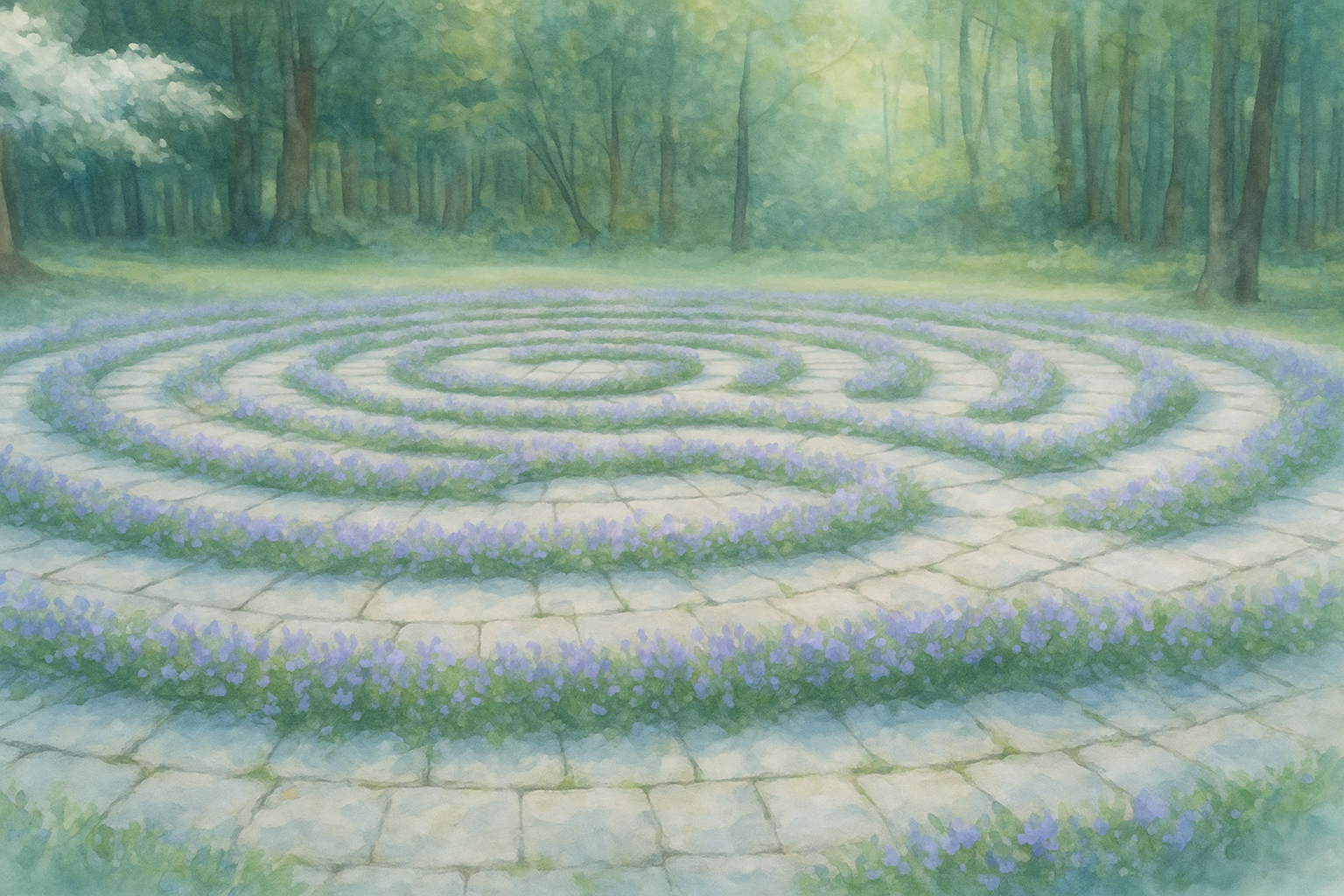
Labyrinths have appeared in many cultures and faith traditions for centuries. Unlike a maze, they are not designed to confuse, but to guide walkers along a single winding path that leads to the center and then returns the same way outward. This gentle, circuitous movement has long been used for prayer, meditation, and reflection.
Our labyrinth at St. Francis is a 40-foot circle built in the Santa Rosa style, a seven-circuit pattern that blends elements of the oldest classical labyrinths with the turns and shapes found in medieval cathedral designs. Sometimes described as “neo-medieval,” this style reflects a modern revival of interest in labyrinths that began in the United States in the late twentieth century. By weaving together ancient inspiration and contemporary interpretation, the Santa Rosa form offers a unique space for both personal contemplation and communal spiritual practice.

Rooted in Honor & Tradition
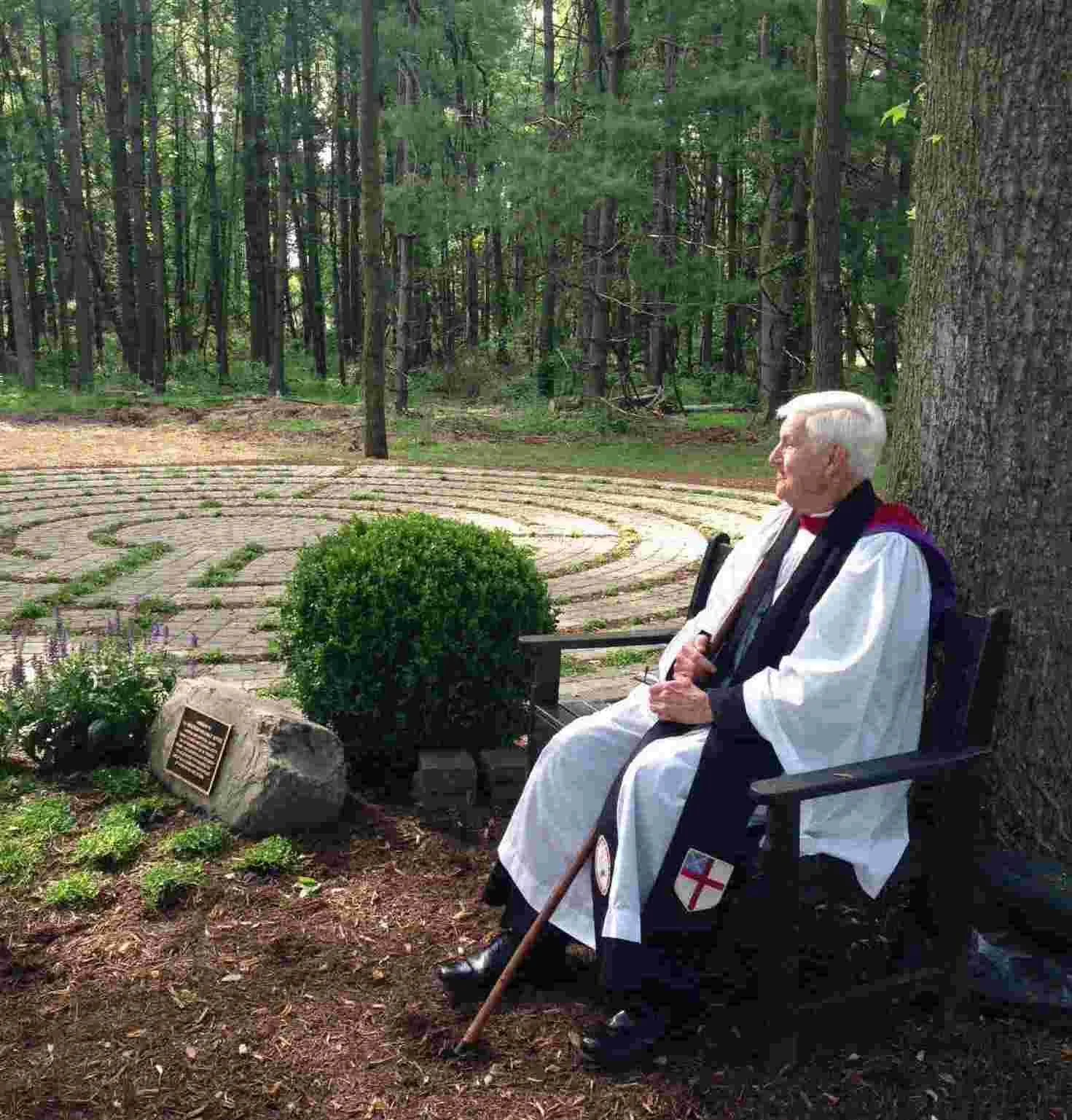
This addition to our spiritual home was built in the spring of 2015 in memory of Jane Salzer. It was dedicated on May 17, 2015, to the Reverend William (Bill) Myers and accomplished with a generous gift from the Salzer family.
As you walk the labyrinth, you may want to think about a problem or just pray and meditate. The center of the labyrinth can be a special place of reflection, insight, and listening for God.
The labyrinth is open during daylight hours for anyone to walk, and it is a wonderful way to meditate and pray while experiencing the beautiful setting of the church and God’s creation.
If you're planning a group visit, please contact us to schedule in advance.
Walking the Labyrinth
There is no right or wrong way to walk a labyrinth, since it is an activity that becomes a metaphor for your own spiritual journey in life. By engaging in walking meditation, you can fully engage your mind, body, and spirit simultaneously. As you walk the labyrinth, you may want to think about a particular issue or just pray and meditate as you walk. The center of the labyrinth can be a special place of reflection, insight, and listening for God.
Choose a familiar prayer, like the Prayer of St. Francis Lord’s Prayer, or a familiar Bible passage, like the 23rd Psalm, and recite it as you walk.
Ask a question of God or pose an issue and listen for God’s response as you walk the labyrinth. Focus on a phrase or word, such as love or peace, as you walk.
Focus on letting go of your worldly distractions as you walk toward the center, and then focus on thanking and praising God as you retrace your steps out of the labyrinth.
Offer intercessory prayers to God for someone who is in need as you walk.
The History of Labyrinths
Labyrinths date back thousands of years and were often connected to holy places of worship. The circle pattern that the winding path follows is a universal symbol of unity, wholeness, and infinity. Representations of labyrinths can be found on rock carvings in Sardinia that date from 2,000 to 2,500 B.C. and on coins and pottery from Crete dating back to 1,200 to 1,500 B.C. King Amenemhet’s labyrinth in Egypt dated from around 1,800 B.C., possibly predating the famous labyrinth supposed to have existed at Knossos on Crete during the Bronze Age. Other representations of labyrinths have been found in Syrian, Greek, Native American, and Celtic cultures.
The earliest known Christian labyrinth is an eight-foot wide labyrinth outside the 4th-century Basilica of Repartus at Orleansville, Algeria. The Washington National Cathedral notes that, as early as 350 B.C., worshipers entering the Algerian basilica would stop and trace the labyrinth in order to focus their thoughts and open themselves up to God.
Early Christians often took a vow to visit the Holy Land during their lives. When this pledge became difficult for many to complete, labyrinths installed on the floors of cathedrals allowed Christians to make a different kind of pilgrimage as a substitute for the journey to Jerusalem. The most famous Christian labyrinth is at Chartres, outside of Paris, dating from 1201. The National Cathedral has a replica of the Chartres design.
In the past 50 years, the labyrinth has become popular again as a tool for spiritual pilgrimage. The labyrinth’s winding shape is a clear metaphor for our spiritual life, and our journey as Christians.